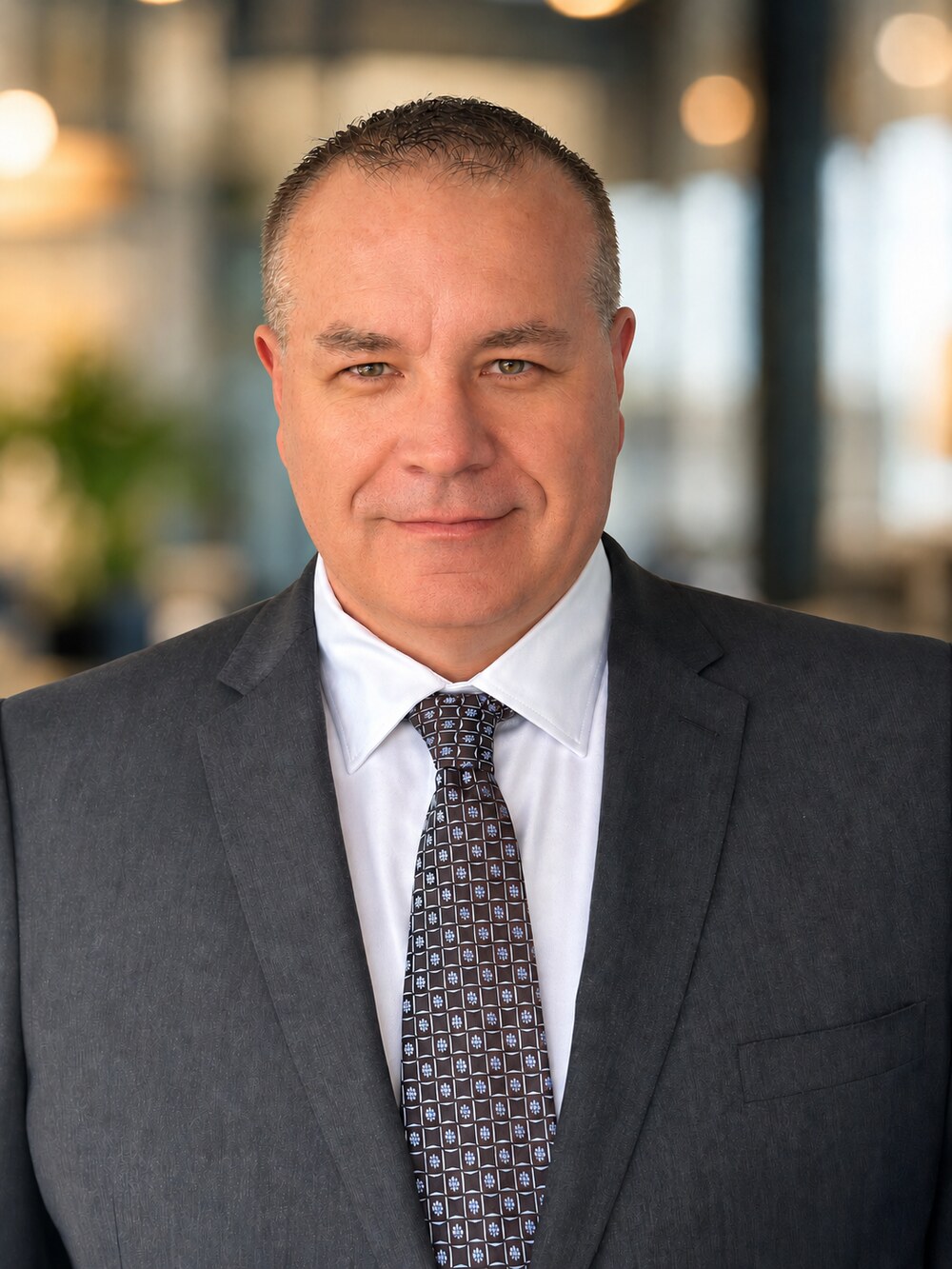
Strategy, coaching and operations for the owners of managed service providers and technology service businesses. You won't spend a month teaching me the model, and you won't get general business advice dressed up in industry language. You'll get someone who has run what you're running, pointed straight at whatever is holding it back.
The first is a capable business consultant who has never carried a contract base, never watched utilization quietly decide whether the month worked, and never had to tell a client why the project they signed in March still isn't finished. The thinking is sound. You just end up paying for their education in your business before any of it comes back to you.
The second knows the industry cold and has never run the company. A peer, a vendor coach, someone from a mastermind group. They can tell you what your service board should look like. They can't help you with a leadership team that agrees in the meeting and then does what it likes, or the partner conversation you've been putting off for a year.
I'm both. Two decades in technology services, a decade of it as the owner, an MBA, and a career built on the operating side rather than the sales side. I know where the money leaks in a business like yours, I know which problems are structural and which ones are just a bad month, and I can get your business running the way you always said it would.
The framework is the same one I use with any owner. What changes is how fast we get to the real problem, because the shape of your business is already familiar to me.
Contract quality, concentration, renewal risk and the slow margin erosion that hides inside an agreement nobody has repriced in three years.
Where the time actually goes, what is being delivered and never billed, and why the technically strongest team is not automatically the profitable one.
Escalations, pricing calls, the difficult client, the hiring decision. The handover of authority that turns a business dependent on you into one that isn't.
What a buyer actually looks at, and the difference between a business that has grown and a business that has become an asset. I have been through that from the inside.

I came into technology services in 2008 as an operations leader and finished as VP of Operations at a managed services provider, where I built the delivery function from nothing. PSA and RMM tooling, ITIL-aligned incident and change management, dispatch and escalation, project governance, and the operating budget that carried all of it. I scaled the technical team several times over while I was there.
Then I bought a technology services business and ran it as the owner for a decade. The pandemic took most of the revenue out from under us almost overnight, and I let a large part of the team go in a single afternoon. We rebuilt on a repositioned strategy, and I started a managed services business inside the company from nothing and had it standing on its own within two years. I ran ConnectWise PSA across most of those years and lived with every configuration decision we made early and regretted later. I sold the business, and this is what I do now.
Contracted revenue, delivery against an SLA, engineers whose time is the product. That is the model I have run, and it is the model you are running. What I bring you isn't a framework with my name on it. It's judgment paid for expensively in a company that looked a lot like yours, and the honesty to tell you when something is outside what I know.
Yes. The work is the same work I do with any owner-operated business, but I owned and ran an MSP myself, so you do not have to spend the first two months explaining recurring revenue, ticket economics or why a good month on the P&L can still be a bad month for cash.
No. I am not coming in to design your stack, tune your RMM or tell your engineers how to do their jobs. The work is the business around the technology: direction, structure, the numbers, the leadership team and the operating rhythm. If you want that separated out, the operations work is the closest fit.
Yes. Any business that provides technology-related services to clients on a fixed-fee basis, or wants to, is the same shape of problem. Contracted revenue, a delivery team whose time is the product, and an owner still holding too much of it together.
I might be, and there are two things to say about that. The first is that I hold strict confidentiality across every client. Nothing that isn't mine to share leaves the room. The second matters more: my practice points inward. I'm here to make your business run better, to get it onto the path you want it on, and to make it work without depending so heavily on you. I don't do marketing or sales strategy, I don't tell you who your clients should be, and I don't touch how you price or package what you sell. Those decisions are yours. My job is to put you on the rails and keep you there.
Straight talk about what's actually going on in the business and whether we're a good fit. No obligation, and if I'm not the right answer I'll tell you.
One client at 20% or more of revenue isn't a good problem to have. I've lived what happens when you lose them. Two things to do about it, starting now.
Read → Operator PerspectiveProfit and cash flow are not the same thing. A business can look steady on the P&L and still reach the month where the money is not there.
Read → Operator PerspectiveAt $500K the owner is the business. By $3M it has to stand on its own. The four things that make the difference.
Read →A discovery call is a straight conversation about where the business is and whether I can help. No pitch, no obligation.
Book a discovery call